Skip to keynote speeches

Keynote Speeches

IEEE International Conference on E-Business Engineering · Wuhan, China

Day 1 · Two keynote speeches

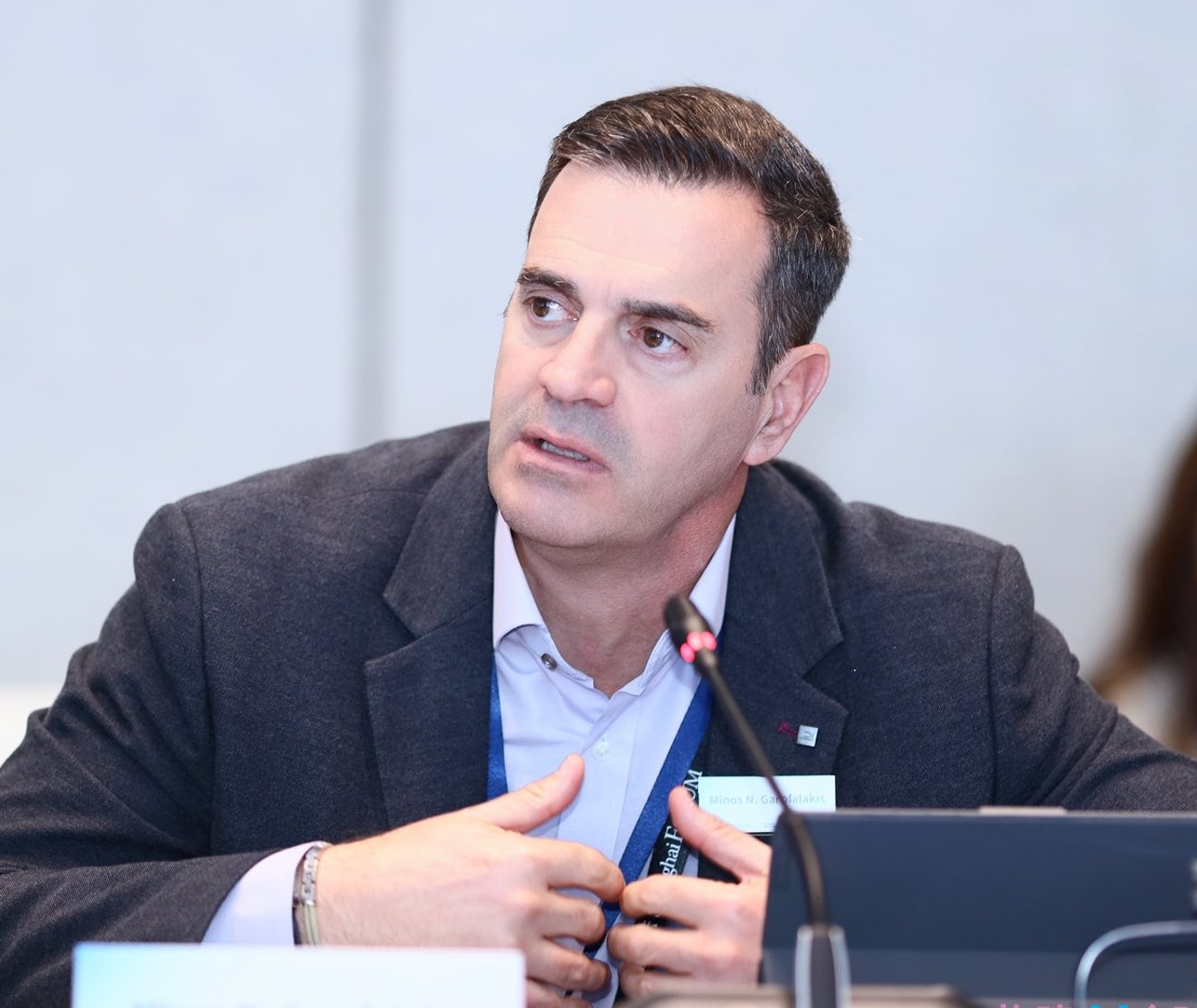
Minos Garofalakis

Minos Garofalakis

Professor, Technical University of Crete; Member of Academia Europaea; ACM / IEEE Fellow

Title: Have your data and share it too: Private AI at scale

Abstract

As the importance of data protection and privacy legislation is increasingly recognized worldwide, protecting sensitive information and individual privacy presents a major challenge for modern AI systems. The ever-growing list of major data breaches (and associated fines) clearly demonstrates the inadequacy of earlier ad-hoc solutions to the problem, as well as the need to effectively bridge legal and technical/systems interpretations of data privacy. In this talk, I will present different modern privacy enhancing technologies (including federated learning, secure computing, differential privacy, and synthetic data), and discuss how they can enable formal, cryptographic notions of privacy in large-scale AI. The focus will be on our recent efforts to build systems and tools to support analytics and machine learning over sensitive medical data. Several open challenges and directions for future research will also be discussed.

Biography

Minos Garofalakis is a Professor at the School of ECE at the Technical University of Crete (TUC), and the Co-founder and Director of Research at Agora Labs, a startup company bringing state-of-the-art data privacy technologies to the healthcare domain. He also recently completed an 8.5-year term as Director of the Information Management Systems Institute (IMSI) at the ATHENA Research Center, where he remains as collaborating faculty member, and has worked as a senior research consultant for Amazon AWS and Huawei. Minos received the MSc and PhD degrees from the University of Wisconsin-Madison and, before his return to Greece, held senior/principal researcher positions at Bell Labs, Intel Research Berkeley, and Yahoo! Research;, in parallel, he worked as an Adjunct Associate Professor at the EECS Department of UC Berkeley (2006-2008). Minos’s research interests lie in the broad area of Big Data Analytics. He has published over 170 papers that have received more than 17,000 citations (h-index=70) according to Google Scholar. Minos is an ACM and IEEE Fellow (for contributions to data analytics), a Member of Academia Europaea, and a recipient of several awards, including the TUC “Excellence in Research” Award, the Bell Labs President’s Gold Award, three Best Research Paper Awards, and ten "best of" conference paper selections.
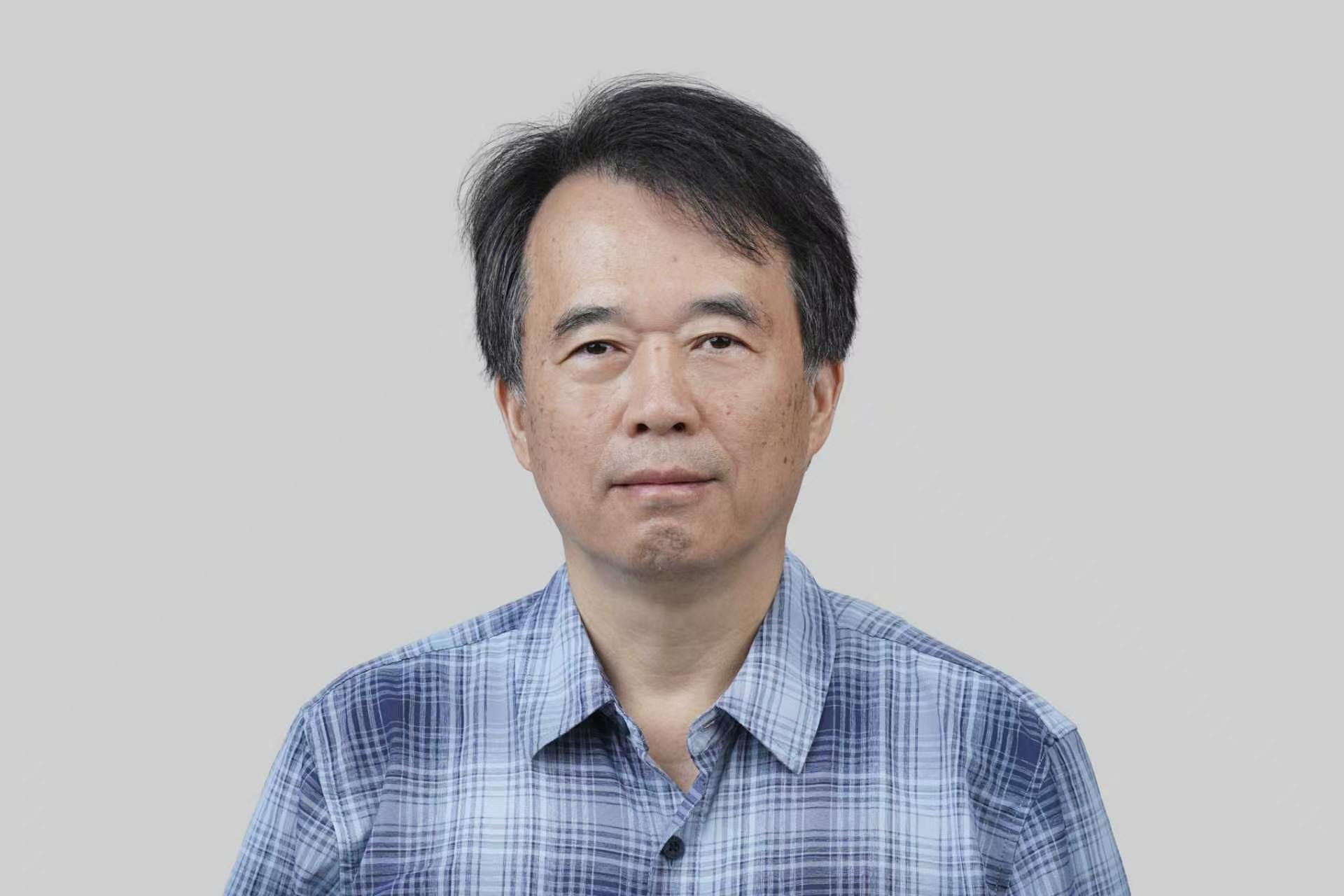
Jen-Yao Chung

Jen-Yao Chung

VP, Business Development, Inventec Corporation; IEEE Fellow

Title: Process to Identify Innovations and AI Services

Abstract

What is Innovation? It’s not always about inventing something entirely new. Innovation occurs at the intersection of invention and insight. It’s about the application of invention - the fusion of new developments and new approaches to solve problems. Creating innovative solutions and services is about creatively solving business problems with reusable assets or building blocks. It is about using a systematic process to solve business and infrastructure problems for speed and quality. AI and Cloud Computing is a model of shared network-delivered services, both public and private, in which the user sees only the service, and need not worry about the implementation or infrastructure. In this talk, lessons learned and future innovation drivers will be presented. We will present building applications based on AI, cloud and everything as a service approach. We will conclude with our views on future trends, directions and research topics on business services in the AI cloud.

Biography

Dr. Jen-Yao Chung received the M.S. and Ph.D. degrees in computer science from the University of Illinois at Urbana-Champaign. Since June 2021, he has been with Inventec Corporation as a VP of Business Development and Head of New Business Development Center for developing vision, strategy and emerging business development. Before that he was AVP, Quanta Cloud Technology for creating hyper converged cloud solutions. Before that he was senior manager for Industry Technology and Solutions, IBM T. J. Watson Research Center, responsible for identifying and creating emerging solutions. Dr. Chung is co-Editor in Chief of the International Journal of Service Oriented Computing and Applications (Springer, EI, ESCI). Dr. Chung is the co-founder and co-chair of the IEEE Computer Society Technical Committee on Electronic Commerce. Dr. Chung co-founded IEEE International Conference on e-Commerce Technology in 1998 and IEEE International Conference on e-Business Engineering in 2004. He has served as general chair and program chair for over 30 international conferences. He has authored or coauthored over 180 technical papers in published journals or conference proceedings. He is an IEEE Life Fellow and a Distinguished Engineer of ACM.

Day 2 · Two keynote speeches

Albert Zomaya

Albert Zomaya

The University of Sydney
IEEE Fellow, Fellow of the Australian Academy of Science
Member of Academia Europaea
Member of the European Academy of Sciences and Arts

Title: From Foundation Models to Assured Intelligence: Engineering Trustworthy AI Services for the Digital Economy

Abstract

Foundation models have changed what AI can do for business. AI is now moving from giving answers to taking actions: agents search, compare, negotiate and pay on behalf of customers and firms. At that point, the question changes from “Is the model smart?” to “Can the service be trusted with the transaction?” At deployment scale, rare errors become routine, and small failures add up quickly across long chains of tool calls and services. Every component can pass its own test while the end-to-end service still fails, with consequences that ripple through orders, payments, customer accounts, and supply chains.

This talk argues that the next phase of e-business must move from capable foundation models to assured intelligence: AI services whose dependability can be shown with evidence rather than assumed. Drawing on two decades of research in distributed systems, cloud economics and scheduling under uncertainty, the talk shows how established engineering ideas carry over to AI services. These include checkpoint and rollback, redundancy and voting, admission control, and learning-augmented algorithms that perform well when predictions are good and stay bounded when they are not. It then presents a framework built on declared properties, runtime evidence and human authority over agents, with assurance budgeted according to the consequences of failure. It also covers recent work on making agentic AI services safe to act, efficient to serve and robust to wrong predictions. The talk closes with open questions for the e-business community: service-level agreements for AI agents, accountability when agents transact, the cost of each AI interaction, trust between agents from different organisations, and evidence for regulators.

Biography

Albert Zomaya is the Peter Nicol Russell Chair Professor of Computer Science at the University of Sydney and Director of the Parallel and Distributed Computing Research Lab. A global leader in parallel and distributed systems, he has authored more than 800 publications and 30 books. He is a Fellow of the IEEE, the Australian Academy of Science, and the Royal Society of New South Wales, and an elected member of Academia Europaea and the European Academy of Sciences and Arts. Professor Zomaya has been recognized as a Clarivate Highly Cited Researcher in multiple years and previously served as Editor-in-Chief of IEEE Transactions on Computers, IEEE Transactions on Sustainable Computing, and ACM Computing Surveys. He is the recipient of many awards, and his work spans parallel and distributed computing, networking, and complex systems, with a lasting influence on both theory and practice.

Hans-Arno Jacobsen

Hans-Arno Jacobsen

University of Toronto
IEEE Fellow
Fellow of the Canadian Academy of Engineering

Title: From Signals to Solutions: Grounded AI Agents for Root Cause Analysis in Complex Systems

Download Slides (PDF)

Abstract

Modern cloud and microservice systems generate vast streams of heterogeneous telemetry—metrics, logs, and traces—yet turning this data into reliable diagnoses and actionable remediation remains a fundamental challenge. Existing approaches either operate on isolated signals, rely on unconstrained LLM reasoning prone to hallucination, or stop at fault ranking without closing the loop to resolution.

This talk presents a new paradigm for operational intelligence: graph-grounded, agentic AI for root cause analysis (RCA). We introduce a novel framework that combines causal inference over service dependency graphs with structured, graph-guided LLM reasoning, integrating multi-modal evidence—including a novel trace-based scoring mechanism—to produce accurate diagnoses, concise incident summaries, and actionable recommendations. Our results demonstrate substantial gains in diagnostic precision and actionability, pointing toward a new generation of trustworthy, graph-aware AI systems for operating complex distributed systems.

Biography

Hans-Arno Jacobsen is a Professor of Electrical and Computer Engineering and Computer Science at the University of Toronto, where he holds the endowed Jeffrey Skoll Chair in Computer Networks and Innovation and is a Tier 1 Canada Research Chair in Data-Intensive Systems. He is an internationally renowned scholar in distributed systems and data management, particularly known for his groundbreaking contributions to distributed event-based and publish/subscribe systems, widely used in enterprise and Internet-scale settings. His research further spans AI systems infrastructure and AI-driven systems, addressing both the engineering of scalable systems for AI workloads and the integration of AI into large-scale system design (cf. msrg.org). He also conducts research on quantum computing, especially distributed quantum computing, and has led the Quantum Software Consortium of Canada (qscc.ca) as its Scientific Director. He has held leadership roles in major international conferences and is widely published in top IEEE/ACM venues. He has received Best Paper and Test-of-Time awards and is a Fellow of the IEEE and a Fellow of the Canadian Academy of Engineering.