The IEEE International Conference on Cloud Engineering (IC2E) conference series provides a high-quality and comprehensive forum where researchers and practitioners can exchange information on engineering principles, enabling technologies, and practical experiences as related to Cloud Computing. By bringing together experts that work on different levels of the cloud stack – systems, storage, networking, platforms, databases, analytics, and applications, IC2E offers an end-to-end view on the challenges and technologies in Cloud Computing, fosters research that addresses the interaction between different layers of the stack, and ultimately drives cloud-based innovation in business and society.
This year the conference will place a special focus on cloud systems for sustainability and sustainability of cloud systems. Other paper topics remain most welcome, of course.
IC2E 2026 is co-located with ACM/IEEE SEC 2026
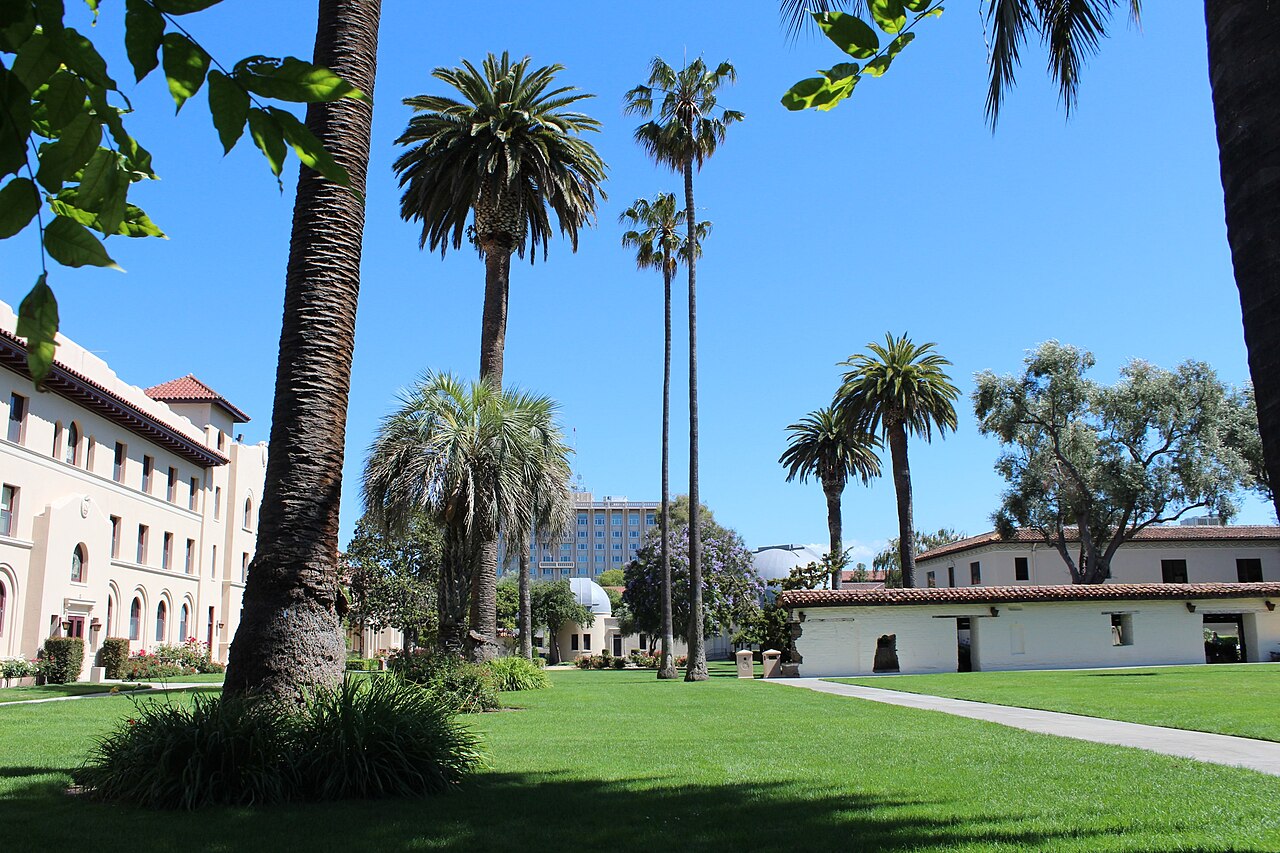
IEEE IC2E 2026 and ACM/IEEE Symposium on Edge Computing (SEC) 2026 will be held together at Santa Clara University. Attendees may participate in technical sessions from either conference, and both communities will come together for a joint poster and demo session.
Argonne National Laboratory, University of Chicago, USA
Title: "This is Not a Testbed": How to Build and Operate Experimental Infrastructure
Abstract: Technology is advancing at an ever accelerating pace creating new opportunities for science: improved sensor technologies now enable precise measurement of a growing range of physical phenomena; single-board computers (SBCs) allow computing to be deployed in hitherto unviable settings cost-effectively; and networking technologies, improving in both quality and coverage, allow us to connect them all into a powerful observatory instrument, adaptable to investigating a wide range of questions. Like a telescope array that uses computation to stitch together input from multiple single telescopes to obtain the desired picture of the sky, a generalized instrument of this kind can rely on a combination of sensing and computation deployed in the field, to "stitch together" a picture of qualities relating to fields ranging from hydrology to medicine. Powered by Al capabilities it can then allow us to investigate problems from floods and wildfires to social inequalities. However, building new experimental systems is both complex and risky: What problems should they solve? How do we put together new technologies to create scientific instruments? If we build them, will they come? At the same time, it is both rewarding and necessary to invest in experimental platforms as they are an essential catalyst for science. In this talk, I will present lessons learned from the development of two NSF-funded, influential, and very distinct experimental systems: the Chameleon project and the FLOTO instrument for distributed broadband research. Chameleon represents over 10 years of experience in constructing, operating, and evolving an instrument for computer science research and education that has to date been used by over 14,000 users, who collectively produced over 1,300 scholarly publications in computer science. It has supported innovative educational ventures, student competitions, and artifact evaluation initiatives, changing community practices on how to share research and education experiences in a digital form. FLOTO has built an edge-to-cloud instrument that deployed an unprecedented 600 SBCs nationwide in the United States to measure broadband, highlight areas of need, and help ensure equitable access to the Internet for all Americans. Both represent experimental systems with distinct objectives and challenges - and both provide lessons and illustrations on how to leverage the exponentially growing opportunities in experimental system design.

Hewlett Packard Enterprise, USA
Title: Beyond the Grid: Rethinking Energy for the AI-Powered Intelligence Era
Abstract: AI is reshaping the world, but its energy footprint is surging with data centers spreading into new communities, particularly in the United States. As such, energy use needs to be considered holistically, from generation, to powering IT infrastructure, and to reuse. This talk with explore how intelligent systems adapt across the data center and energy lifecycle – balancing demand, integrating distributed power, and enhancing grid stability. We’ll discuss ways in which AI infrastructure can shift from energy consumer to active grid partner by powering scalable, resilient intelligence for the future.
Independent Technologist, USA
Bio: Zoran Dimitrijevic is an independent technologist and startup advisor focusing on AI-driven large-scale distributed systems. He previously held principal engineering leadership roles at Airbnb, SAP, and Altiscale, and was an early software engineer at Google. He has led foundational work across storage, data platforms, search products, and core infrastructure. He holds M.Sc. and Ph.D. degrees in Computer Science from UC Santa Barbara and is an IEEE Senior Member.
Equinix, USA
Bio: Ravi Pasula is a technology and AI leader with over 20 years of experience driving digital transformation through data science, machine learning, and advanced analytics. As Senior Director of Machine Learning at Equinix, he leads global teams developing AI-powered solutions that optimize operations, accelerate business decisions, and enable intelligent digital infrastructure at worldwide scale.
University of California, Riverside, USA
Bio: Shaolei Ren is a Professor of Electrical and Computer Engineering at the University of California, Riverside. His research focuses on modeling and algorithms for efficient AI and computing systems. He is a recipient of the U.S. National Science Foundation CAREER Award (2015). He received his Ph.D. degree from the University of California, Los Angeles.


Equity, diversity, and inclusion are central to the goals of the IEEE Computer Society and all of its conferences. Equity at its heart is about removing barriers, biases, and obstacles that impede equal access and opportunity to succeed. Diversity is fundamentally about valuing human differences and recognizing diverse talents. Inclusion is the active engagement of diversity and equity.
A goal of the IEEE Computer Society is to foster an environment in which all individuals are entitled to participate in any IEEE Computer Society activity free of discrimination. For this reason, the IEEE Computer Society is firmly committed to team compositions in all sponsored activities, including but not limited to, technical committees, steering committees, conference organizations, standards committees, and ad hoc committees that display equity, diversity, and inclusion.
IEEE Computer Society meetings, conferences and workshops must provide a welcoming, open and safe environment, which embraces the value of every person, regardless of race, color, sex, sexual orientation, gender identity or expression, age, marital status, religion, national origin, ancestry, or disability. All individuals are entitled to participate in any IEEE Computer Society activity free of discrimination, including harassment based on any of the above factors.
IEEE believes that science, technology, and engineering are fundamental human activities, for which openness, international collaboration, and the free flow of talent and ideas are essential. Its meetings, conferences, and other events seek to enable engaging, thought provoking conversations that support IEEE’s core mission of advancing technology for humanity. Accordingly, IEEE is committed to providing a safe, productive, and welcoming environment to all participants, including staff and vendors, at IEEE-related events.
IEEE has no tolerance for discrimination, harassment, or bullying in any form at IEEE-related events. All participants have the right to pursue shared interests without harassment or discrimination in an environment that supports diversity and inclusion. Participants are expected to adhere to these principles and respect the rights of others.
IEEE seeks to provide a secure environment at its events. Participants should report any behavior inconsistent with the principles outlined here, to on site staff, security or venue personnel, or to eventconduct@ieee.org.