IC2E 2026 Detailed Program

Below is a the program for IC2E. All session times refer to Pacific Daylight Time (UTC/GMT-7).

1pm - 1:15pm

Opening
Opening remarks: Rich Wolski, University of California, Santa Barbara, USA

Room: 101 Parlors B&C, Benson Center Building

Panel on The Convergence of Computing and Power
Panel chair: Rich Wolski, University of California, Santa Barbara, USA

Room: 101 Parlors B&C, Benson Center Building

The rapid growth of AI and data centers is tightening the coupling between computing systems and the power grid. This panel will discuss how computing demand, grid capacity, energy storage, cooling, and flexible workloads can be co-designed to improve efficiency, reliability, and scalability. We will also examine emerging challenges in power-constrained computing, data-center demand response, and the infrastructure needed to support future AI systems.
  • Cullen Bash – Hewlett Packard Enterprise, USA
  • Bio: Cullen Bash is a Vice President of R&D and Deputy Director of HPE Labs. He also serves as Director of the Systems Architecture Lab, a multidisciplinary team advancing next-generation systems architecture from research to revenue. His work spans system and fabric architecture, system software, simulation and modeling, software-hardware co-design, optimization, and sustainability. Previously, he directed the Platform Architecture Lab and served as interim Director of the Sustainable Ecosystems Research Group, where he led research into the sustainability of IT equipment and the use of IT to improve the sustainability of customer ecosystems. He was also Principal Investigator of the Sustainable Data Center project. He is a Fellow of both IEEE and the American Society of Mechanical Engineers.

  • Zoran Dimitrijevic – Independent Technologist, USA
  • Bio: Zoran Dimitrijevic is an independent technologist and startup advisor focusing on AI-driven large-scale distributed systems. He previously held principal engineering leadership roles at Airbnb, SAP, and Altiscale, and was an early software engineer at Google. He has led foundational work across storage, data platforms, search products, and core infrastructure. He holds M.Sc. and Ph.D. degrees in Computer Science from UC Santa Barbara and is an IEEE Senior Member.

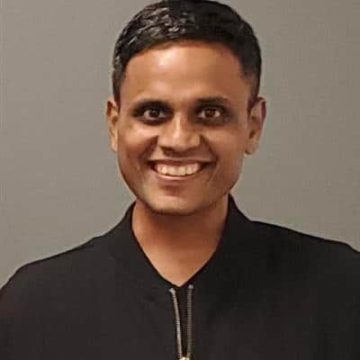
  • Ravi Pasula – Equinix, USA
  • Bio: Ravi Pasula is a technology and AI leader with over 20 years of experience driving digital transformation through data science, machine learning, and advanced analytics. As Senior Director of Machine Learning at Equinix, he leads global teams developing AI-powered solutions that optimize operations, accelerate business decisions, and enable intelligent digital infrastructure at worldwide scale.

  • Shaolei Ren – University of California, Riverside, USA
  • Bio: Shaolei Ren is a Professor of Electrical and Computer Engineering at the University of California, Riverside. His research focuses on modeling and algorithms for efficient AI and computing systems. He is a recipient of the U.S. National Science Foundation CAREER Award (2015). He received his Ph.D. degree from the University of California, Los Angeles.

2:30pm - 4:15pm


See SEC conference program

Room: Williman Room, Benson Center Building

4:30pm - 6:30pm

Poster and demo session
Joint poster and demo session with SEC conference

Room: 101 Parlors B&C, Benson Center Building
Demos
  • Demo: Near Real-Time Entity Risk Alerting at Scale, Kritika Rai and Cheyenne Martinez
  • Demo: Private Cloud Elasticity: Two-Level Autoscaling Across Virtual and Physical Infrastructure, Viralkumar Ahire and Arun Pandiyan Perumal
Posters
  • Poster: Design and Deployment of a Cloud-Native IoT Health Monitoring Pipeline: An Experience Report on Real-Time Streaming and Scalability, George Eleftherakis, Petros Minoudis and Anca Vasilescu
  • Poster: Agentic Cloud Decoys: A Deception-Driven Framework for Autonomous Intrusion Investigation, Mohankumar Manivannan and Dalal Alharthi
  • Poster: Praxium: Diagnosing Cloud Anomalies with AI-based Telemetry and Dependency Analysis, Rohan Kumar, Jason Li, Zongshun Zhang, Syed Mohammad Qasim, Gianluca Stringhini and Ayse K. Coskun
  • Poster: Not Just a Transport Flag: The Trust-Model Transition of Cloud-Deployed MCP Servers, Robert Delfs and Dalal Alharthi
  • Poster: Constraint-Aware Startup Optimization for Containerized ML Workloads at Scale, Nikita Arbuzov
  • Poster: QUEST: Measuring Cloud Forensic Readiness as a Telemetry-Design Decision, Alex Agnick and Dalal Alharthi
  • Poster: Evidence-Typed Dependency Graphs and Grounded LLMs for Root-Cause Analysis, Venkata Mahesh Kundurthi, Bharath Cherukuru, Usha Bindu Velpula, Ivan Roberto Kawaminami Garcia and Dalal Alharthi
  • Poster: Towards Multimodal Metric-Log-Trace Fusion for Anomaly Detection in the Cloud-Edge-IoT Continuum, Abderrahmane Boucenna, Mehdi Acheli, Mohamed Sellami and Walid Gaaloul
  • Poster: AI-Assisted Workload-Aware Migration of Healthcare Enterprise Integrations to AWS, Teja Karna, Gautam Nayak, Jaspinder Singh Virdee, Rajesh Kucharlapati and Ravi Jogi

9am - 10am

Keynote: "This is Not a Testbed": How to Build and Operate Experimental Infrastructure
Keynote chair: Rich Wolski, University of California, Santa Barbara, USA

Room: CA Mission Room, Benson Center Building


Abstract: Technology is advancing at an ever accelerating pace creating new opportunities for science: improved sensor technologies now enable precise measurement of a growing range of physical phenomena; single-board computers (SBCs) allow computing to be deployed in hitherto unviable settings cost-effectively; and networking technologies, improving in both quality and coverage, allow us to connect them all into a powerful observatory instrument, adaptable to investigating a wide range of questions. Like a telescope array that uses computation to stitch together input from multiple single telescopes to obtain the desired picture of the sky, a generalized instrument of this kind can rely on a combination of sensing and computation deployed in the field, to "stitch together" a picture of qualities relating to fields ranging from hydrology to medicine. Powered by Al capabilities it can then allow us to investigate problems from floods and wildfires to social inequalities. However, building new experimental systems is both complex and risky: What problems should they solve? How do we put together new technologies to create scientific instruments? If we build them, will they come? At the same time, it is both rewarding and necessary to invest in experimental platforms as they are an essential catalyst for science. In this talk, I will present lessons learned from the development of two NSF-funded, influential, and very distinct experimental systems: the Chameleon project and the FLOTO instrument for distributed broadband research. Chameleon represents over 10 years of experience in constructing, operating, and evolving an instrument for computer science research and education that has to date been used by over 14,000 users, who collectively produced over 1,300 scholarly publications in computer science. It has supported innovative educational ventures, student competitions, and artifact evaluation initiatives, changing community practices on how to share research and education experiences in a digital form. FLOTO has built an edge-to-cloud instrument that deployed an unprecedented 600 SBCs nationwide in the United States to measure broadband, highlight areas of need, and help ensure equitable access to the Internet for all Americans. Both represent experimental systems with distinct objectives and challenges - and both provide lessons and illustrations on how to leverage the exponentially growing opportunities in experimental system design.
10:30am - 12pm

Technical session: Agentic and LLM-Driven Cloud Systems
Session chair: Georgios Eleftherakis, Penn State University, USA

Room: 101 Parlors B&C, Benson Center Building
  • DSTBench: Distributed Systems Traces driven Agentic Performance Debugging in Microservices, Syed Mohammad Qasim, Gianluca Stringhini, Ayse K. Coskun, Sam Xi, Deniz Altınbüken and Amir Yazdanbakhsh
  • Duet Instrumentation: An Agentic Approach to Improving Sensitivity in Cloud Service Benchmarks, Sebastian Koch, Nils Japke and David Bermbach
  • Evaluating LLM Trade-offs for Enterprise Automation: Lessons from Workflow Generation in a Production Enterprise Platform, Anca Sailer, Xavier Wrenn, Yuji Watanabe, Radoslav Raykov, Aleksandar Angelov and Hirokuni Kitahara

1pm - 2:30pm

Technical session: Serverless and Cloud-Native Computing
Session chair: Shaolei Ren, University of California, Riverside, USA

Room: 101 Parlors B&C, Benson Center Building
  • Konflux: Optimized Function Fusion for Serverless Applications, Niklas Kowallik, Trever Schirmer and David Bermbach
  • FaaS-GAUGE: A Large Language Model Benchmark for Quality Assessment of Serverless Function Generation, Xinghan Chen, Robert Cordingly, Ling-Hong Hung and Wes J. Lloyd
  • (short paper) Kirin: Cloud-native WebAssembly Service Orchestration, Joshua Bauer, Sebastian Werner and Maria C. Borges
  • (short paper) Optimal Deployment of AI agents on Serverless Platforms, Manju Ramesh, Dheeraj Chahal, Ahish Bindhumadhavan, Shruti Kunde and Vinay Sharma

3pm - 4:30pm

Technical session: Storage and Data Systems
Session chair: Zoran Dimitrijevic, Independent Technologist, USA

Room: 101 Parlors B&C, Benson Center Building
  • Ariadne: A Resilient IoT Storage Service for Geospatial Computing, Vinayak Gajjewar, Chandra Krintz and Rich Wolski
  • Hardware-Transparent I/O Governance in Disaggregated Heterogeneous Storage, Rajarshi Chowdhury, Akshay Shah and Sue Lee
  • (short paper) Containerized Multi-Version Operation of Synchronously-Replicated Database Clusters: Architecture and Operational Insights from a Production-Oriented Deployment, Isabel Sebastian and Sebastian Schlesinger
  • (short paper) CDC-Cache: CDC-Triggered Precise Cache Invalidation for Distributed OLAP Engines, Kunal Jain

7pm

Banquet

Room: 101 Parlors B&C, Benson Center Building

9am - 10am

Keynote: Beyond the Grid: Rethinking Energy for the AI-Powered Intelligence Era
Keynote chair: Rich Wolski, University of California, Santa Barbara, USA

Room: CA Mission Room, Benson Center Building


AI is reshaping the world, but its energy footprint is surging with data centers spreading into new communities, particularly in the United States. As such, energy use needs to be considered holistically, from generation, to powering IT infrastructure, and to reuse. This talk with explore how intelligent systems adapt across the data center and energy lifecycle – balancing demand, integrating distributed power, and enhancing grid stability. We’ll discuss ways in which AI infrastructure can shift from energy consumer to active grid partner by powering scalable, resilient intelligence for the future.

10:30am - 12pm

Technical session: Edge, IoT, and Resource-Efficient Computing
Session chair: Zoran Dimitrijevic, Independent Technologist, USA

Room: 101 Parlors B&C, Benson Center Building
  • DiCEI: Distilled iTransformer for Effective Lightweight Anomaly Detection Across the Cloud–Edge–IoT Continuum, Abderrahmane Boucenna, Mehdi Acheli, Mohamed Sellami and Walid Gaaloul
  • (short paper) A Reliability Engineering Framework for Long-Lived Data Platforms, Sravanthi Kondoju
  • HeliosAdapt: Service Quality Adaptation for Solar-Powered Edge Clusters, Ammar Kazem, Guillaume Pierre and Laurent Longuevergne

1pm - 2:30pm

Technical session: Performance Engineering and Cloud Platforms
Session chair: Jan S. Rellermeyer, Leibniz Universität Hannover, Germany

Room: 101 Parlors B&C, Benson Center Building
  • Platform Agnostic Capacity Planning for Heterogeneous Cloud Storage: A Production Machine Learning Approach, Anupama Jagannathan, Joe Loas, Chris Dye, Brian Reitz and Piyush Shivam
  • Robust KV Cache Management for LLM Serving under Output Token Length Uncertainty, Jiaming Cheng, Duong The Do and Duong Nguyen
  • Engineering a High-Performance Cloud-Native Ingress Layer for Latency-Sensitive Payment Processing at Scale, Ritvik Pandya

3pm - 5pm

Technical session: Scheduling, Orchestration, and Multi-Cloud Optimization
Session chair: Markus Mock, University of Applied Sciences Landshut, Germany

Room: 101 Parlors B&C, Benson Center Building
  • Beyond the Limits: Flexible and Congestion-Aware Cluster Scheduling for the Cloud, Oliver Larsson, Thijs Metsch, Cristian Klein and Erik Elmroth
  • SkyHOSTop: Cost‑Aware Multi‑Cloud Streaming Overlay Optimization, Muhammad Arslan Tariq, Gwen Maudet, Grégoire Danoy and Pascal Bouvry
  • Event-Driven ML Pipeline Orchestration for Manufacturing: An AWS Industry Experience, Zhengyang Gu, Thomas Cook, Fredaljohn Rohrbaugh, Joseph E. Hernandez and Chris Couch
  • A-FinOps: a framework definition aiming to automate decision-making for multi-cloud application deployment, Bruno Lopes and Auri Marcelo Rizzo Vincenzi