Keynote I
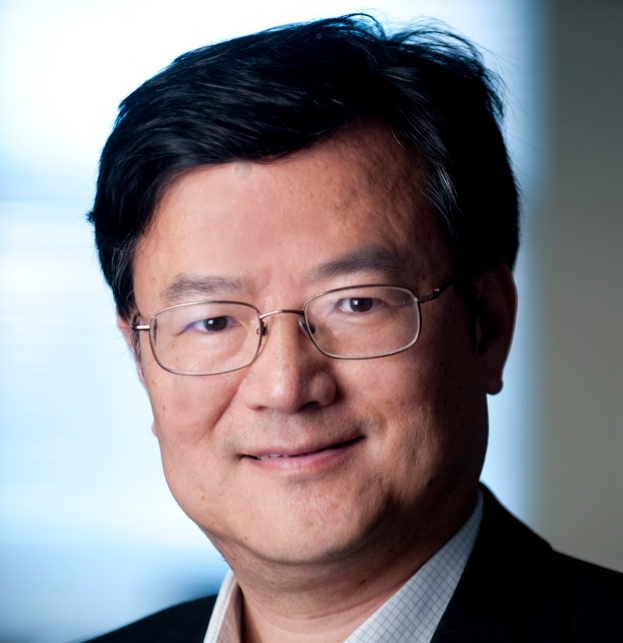
Bin He
Trustee Professor, Biomedical Engineering
Carnegie Mellon University
Title: Bidirectional Brain-Computer Interfaces: Challenges and Opportunities
Abstract: Brain-computer interface (BCI) is a neurotechnology that enables direct brain-based communication between an individual and the rest of the world. BCI is a system that decodes the user’s mental state or intention and maps such information to the action of a device that interacts with the surrounding environment. Other interesting avenues of BCIs investigate how neuromodulation impacts the performance of the nervous systems for completing various tasks. In this talk, I will present our work on developing noninvasive BCI technology from scalp-recorded EEG signals for controlling a computer cursor, a robotic arm and hand using only the “thought” of human subjects. I will also present our work on developing transcranial focused ultrasound neuromodulation technology for noninvasive precision stimulation of brain circuits, aiding the treatment of pain and epilepsy. I will discuss our work on a bidirectional BCI approach integrating motion visual evoked potential speller and transcranial focused ultrasound modulation of V5 for significantly enhancing the BCI performance in human subjects.
Bio: Bin He is Trustee Professor of Biomedical Engineering, Professor in the Neuroscience Institute, and Professor (by courtesy) of Electrical and Computer Engineering at Carnegie Mellon University. Previously, he served as Head of the Department of Biomedical Engineering at Carnegie Mellon University, as well as Director of the Institute for Engineering in Medicine and Founding Director of the Center for Neuroengineering at the University of Minnesota. Dr. He is a world-renowned leader and pioneer in neurotechnology. His research is aimed at advancing the understanding of brain function and improving the diagnosis and treatment of neurological disorders. His pioneering work transformed EEG from a 1D signal detection technique into a 3D, dynamic neuroimaging modality, now widely used in research laboratories and clinical centers worldwide. His lab has achieved several groundbreaking milestones in noninvasive brain–computer interfacing, including the first demonstrations of EEG-based control of a drone, a robotic arm, and a robotic hand with individual finger movements. These advances have helped propel the field of neurorobotics forward and hold significant promise for improving quality of life for patients with neurological impairments as well as the general population. Dr. He’s contributions have been recognized with prestigious awards, including the IEEE Biomedical Engineering Award, the IEEE EMBS William J. Morlock Award, the IEEE EMBS Academic Career Achievement Award, the AIMBE Earl Bakken Lecture Award, and the AIMBE Professional Impact Award for Leadership. He has served as Past Chair of the International Academy of Medical and Biological Engineering (IAMBE), Past President of the IEEE Engineering in Medicine and Biology Society (EMBS), former Editor-in-Chief of IEEE Transactions on Biomedical Engineering, and as a member of the inaugural NIH BRAIN Initiative Multi-Council Working Group. Dr. He currently serves as Editor-in-Chief of IEEE Reviews in Biomedical Engineering. Dr. He is a Fellow of the National Academy of Inventors, IEEE, AIMBE, IAMBE, and BMES.
Keynote II
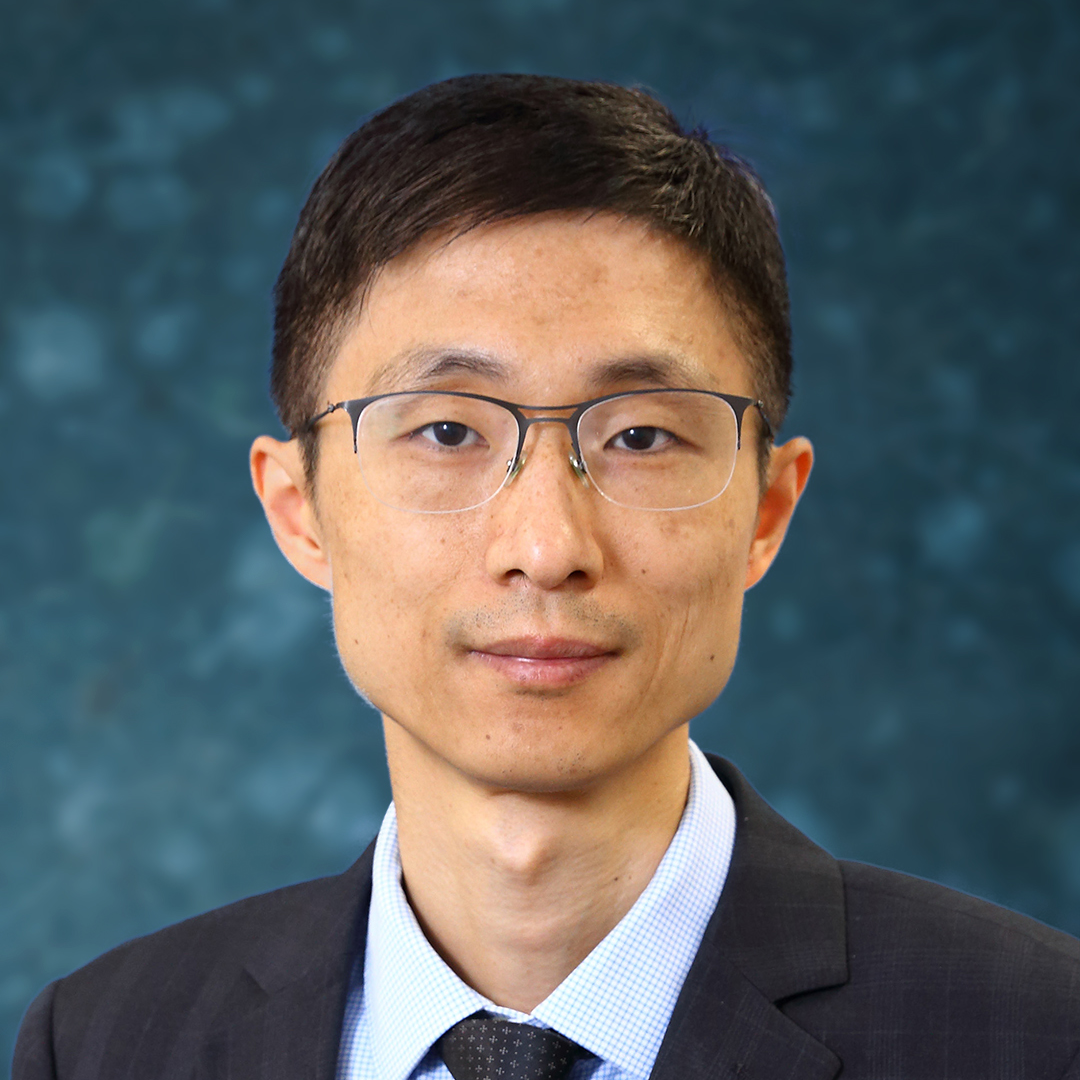
Guoliang Xing
Professor, Department of Information Engineering
The Chinese University of Hong Kong
Title: Empowering Personalized Healthcare with Multi-Modal AI and Intelligent Sensing
Abstract: Aging populations and chronic diseases are among the most urgent global health challenges today. Yet diagnostic and monitoring solutions remain largely confined to clinical settings—limiting access, delaying intervention, and preventing continuous, personalized care.
AI and smart sensing technologies offer a transformative paradigm: enabling aging in place, supporting proactive chronic disease management, and bringing healthcare into everyday living environments. In this talk, we present a suite of AI-driven systems advancing this vision. We begin with ADMarker, a multimodal AI system that detects novel digital biomarkers for early Alzheimer’s diagnosis and intervention by integrating sensing technologies with large language models (LLMs). It is currently being validated in a five-year clinical trial involving 1,500 participants. Next, we introduce Myo-Trainer, the first LLM-empowered in-home rehabilitation system combining muscle-aware motion analysis with expert knowledge to deliver real-time corrective feedback. Finally, we present Nuna, a commercial smart pendant powered by on-device LLMs and multimodal sensors that generates reflective life journals capturing daily emotions, activities, and social interactions to support mental health and quality of life.
At the core of these systems lies the challenge of robust multimodal human action recognition and reasoning. Progress has been limited by the lack of scalable, high-quality datasets. To address this, we introduce CUHK-X, a large-scale multimodal dataset and benchmark suite for human activity understanding. Building on CUHK-X, we have launched an international competition to accelerate the research and deployment of AI-driven personalized healthcare systems.
Bio: Guoliang Xing received his Doctor of Science degree from Washington University in St. Louis in 2006. He is currently Professor and Chairman of the Department of Information Engineering at The Chinese University of Hong Kong (CUHK). Prior to joining CUHK, he served on the faculty at Michigan State University from 2008 to 2017. Professor Xing’s research lies at the intersection of systems, embedded AI, and healthcare. He has led the development of several pioneering mobile health technologies, including iSleep, one of the first mobile sleep monitoring systems to be commercialized and adopted by thousands of users. He is currently leading multiple large-scale clinical studies on AI for aging and chronic conditions, involving more than 1,500 participants. He is the recipient of the US National Science Foundation CAREER Award (2010), the Withrow Rising Scholar Award from Michigan State University (2014), the Research Excellence Award from CUHK (2024), and the Hong Kong Research Grants Council Senior Research Fellowship—awarded annually to only ten scholars across all disciplines in Hong Kong. His work has received six Best Paper Awards at leading international conferences. He is a Fellow of both the ACM and the IEEE.
Keynote III

Goli Yamini
Section Head
National Science Foundation (NSF)
Title: Cross-disciplinary Collaborations beyond the Traditional Boundaries
Abstract: The most transformative advances in computing and technology increasingly emerge at the intersection of disciplines, where meaningful collaboration is not an afterthought but foundational to the research process. Collaborations that bring together complementary expertise are essential to defining the right questions, generating meaningful data, developing effective models, and validating technologies in real-world contexts. As advances in sensing, including emerging quantum sensing technologies, medical imaging, three-dimensional and graph-based learning, robotics, embodied AI, and secure and trustworthy artificial intelligence continue to accelerate, the opportunities for innovation are expanding across traditional disciplinary boundaries. Realizing this potential requires collaborations in which partners have genuine expertise, meaningful investment, and a shared stake in the problem being addressed—not simply participation at the margins of a research project. Ultimately, the future of technological innovation will depend not only on what we can build, but on our ability to bring together the right people, perspectives, and disciplines to ensure that we are solving the right problems and developing technologies that are effective, trustworthy, and meaningful.
Bio: Goli Yamini is currently the Head of Software and Systems Foundations Section (SSF), Computer and Information Science and Engineering Directorate (CISE) at National Science Foundation. Her duty at NSF is to provide strategic leadership and operational oversight for SSF section, supervising program directors and managing research portfolios, budget planning, workforce performance, and section operations. She leads program planning and execution for multidisciplinary research initiatives, overseeing merit review, funding recommendations, post-award stewardship, and portfolio management across AI, smart health, computing systems, and emerging technologies. She also represents NSF in cross-directorate, interagency, and international collaborations, providing scientific and policy leadership while fostering partnerships with the research community through outreach, workshops, and strategic initiatives. Prior to her current role as the Section Head, she also served as the NSF Associate Program Director, led the Smart and Connected Health (SCH) program and contributed to many other NSF programs including III cluster and National AI Research Institutes.